
Quick Summary
A stone shot blasting machine gives granite, marble, sandstone, tiles, and paver blocks a rough, textured, anti-slip surface by firing steel abrasive at them at high speed. It is a major investment for any stone unit, and the wrong choice can mean poor finish, high running cost and constant breakdowns. Before you buy, check the machine type, working size, blast wheel quality, shot recycling, dust control, build quality and the manufacturer’s support.
Table of Contents
What Is a Stone Shot Blasting Machine?
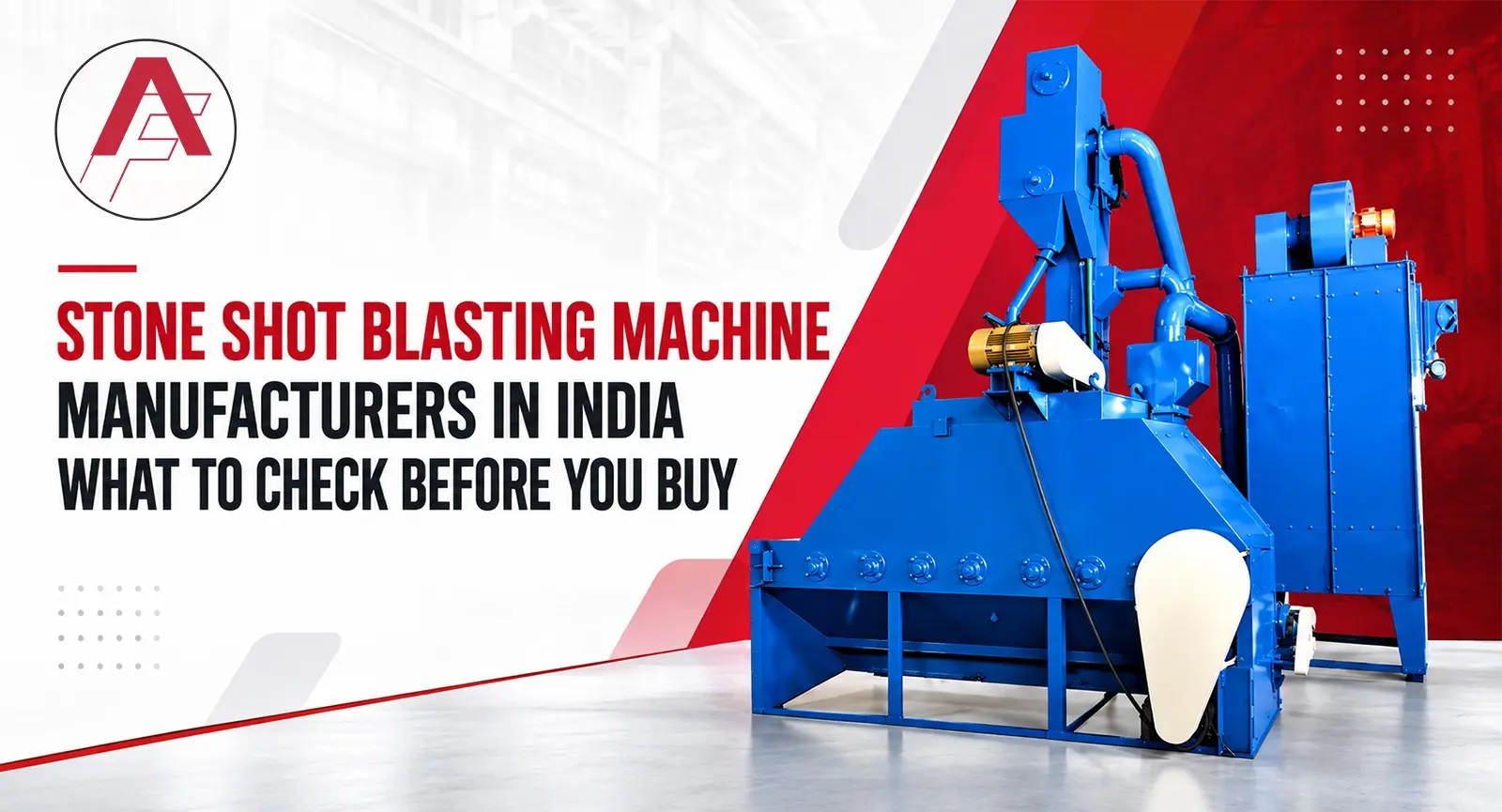
A stone shot blasting machine is an industrial machine that gives stone a rough or textured finish by hitting it with fast-moving steel shot or steel grit. The stone passes through an enclosed chamber on a conveyor, and the blast wheels throw the abrasive at the surface.
Stone processors use it to solve a few common problems:
- A polished surface is slippery, so it is risky for floors, steps and outdoor paving.
- Plain cut stone can look flat and plain.
- Saw marks, stains and uneven areas need to be hidden or removed.
Blasting gives an anti-slip, natural-looking surface in one automatic pass, without the heavy manual effort of older methods.
How Does a Stone Shot Blasting Machine Work?
The working process of this shot blasting machine is easy to follow.
- The stone slab or tile is placed on a conveyor and moves into the blasting chamber.
- One or more blast wheels (also called turbines) spin at high speed.
- Steel shot is fed to the wheels, which throw it onto the stone surface.
- The impact roughens the surface evenly, and the depth of texture depends on the shot size, the wheel speed and the conveyor speed.
- The used shot falls to the bottom and goes to a separator, which cleans it and sends the good shot back to the wheels.
- A dust collector removes the fine stone dust from the chamber.
- The finished stone leaves the machine, and the next piece enters.
This closed-loop design saves abrasives and keeps dust under control.
Where a Stone Shot Blasting Machine Is Used
- Granite and marble units: slabs and tiles with an antique or leather-like finish.
- Sandstone and limestone processing: textured paving and cladding.
- Paving and kerbstones: anti-slip outdoor surfaces.
- Countertop and cladding makers: a natural, matte look.
- Stone exporters: meeting the finish demands of overseas buyers.
- Large stone clusters: in states such as Rajasthan, Karnataka and Andhra Pradesh, where many units process stone every day.
For these businesses, a good machine means a steady supply of finished product, which is why the selection deserves time.
What to Check Before You Buy
1. Machine type and fit with your stone
Different stones react differently to blasting. Hard granite needs a different setup from soft sandstone or marble. Tell the manufacturer the stone types, the product shapes and the finish you want. Ask whether the machine can handle the range of stones you work with.
2. Working width, thickness and output
- Maximum slab width and thickness: the opening must suit your largest pieces.
- Conveyor speed range: a slower speed gives a deeper texture, while a faster speed increases output.
- Daily capacity: ask how many square metres the machine can finish per hour for your stone, not only the figure in the brochure.
3. Blast wheel (turbine) quality
The wheels are the heart of the machine.
- Check the number of wheels and the motor power of each.
- Ask about the wheel design, the wear-resistant liners and the blades, and how long they last.
- Make sure spare blades and liners are easy to get, and ask for the price.
- Check that the wheel settings can be changed for different finishes.
4. Abrasive handling and recycling
Shot is a running cost, so a good recycling system saves money.
- A strong separator removes dust and broken shot.
- Good shot flow control avoids waste.
- Ask how much shot the stone shot blasting machine uses per hour, and what is the shot size range.
5. Dust collection and safety
Stone dust can contain silica, which is harmful to the lungs. This point should never be treated as an extra.
- Check the capacity and filter type of the dust collector.
- The chamber should be sealed, with safety interlocks on doors.
- Ask about noise levels and ways to reduce them.
- Make sure the design helps you meet local pollution and workplace safety rules.
- Plan protective equipment and regular dust disposal.
6. Build quality
- A heavy, rigid frame reduces vibration.
- The chamber should have strong wear liners where the shot hits.
- The conveyor should be sturdy, with smooth movement.
- Electrical parts should be from reliable brands, with a neat, labelled panel.
- Welding, painting and finishing show how carefully the maker works.
Questions to Ask a Manufacturer
A good manufacturer will answer these clearly and in writing.
- Are you the manufacturer, or a trader?
- How many stone shot blasting machines have you installed, and can I speak to those customers?
- Can you test my stone sample, or arrange a demonstration?
- What is the real output for my stone and finish?
- What is the shot consumption, and the life of wheel blades and liners?
- What dust collection system is included?
- What is the warranty, and what does it cover?
- Do you provide installation, commissioning and operator training?
- How quickly can you supply spares and send a technician?
- What is the delivery time?
Running Cost and Maintenance
The purchase price is only part of the cost. Think about these ongoing items.
- Shot: the abrasive wears down and must be topped up.
- Wear parts: wheel blades, liners and other parts need replacement.
- Electricity: wheel motors and the dust collector use power.
- Filters: the dust collector needs regular cleaning and change.
- Labour and training: skilled operators get better results.
Simple habits help the machine last longer.
- Check the wear parts on a fixed schedule.
- Clean the separator and dust collector regularly.
- Keep the shot dry and the right size.
- Follow the greasing plan for bearings.
- Keep a log of hours run, parts changed and faults.
The cheapest machine is not always the lowest-cost one. A machine with better wear parts and recycling often costs less to run.
Conclusion
A stone shot blasting machine turns plain stone into a textured, safe and attractive product, and it does so quickly and evenly. Choosing the right capacity, build quality and manufacturer matters more than choosing the lowest price. Ask for trials, check wear parts and confirm the service support before you decide. If you need dependable stone blasting machines in standard or customised sizes, you can get in touch with Adarsh Fabricators. They manufacture a wide range of shot blasting machines and also supply spare parts, shot and grit media, and machine servicing for single and bulk buyers.
Frequently Asked Questions
It is a machine that throws steel shot at stone surfaces to give them a rough, textured or antique finish.
Stone moves on a conveyor into a chamber, where spinning wheels throw steel shot onto the surface. The shot is cleaned, recycled and reused, while dust is collected.
Granite, marble, sandstone, limestone, slate and similar stones can be blasted. The settings and results differ by stone type.
Shot blasting throws steel shot with spinning wheels, and suits high-volume work on slabs. Sand blasting uses compressed air and suits smaller, detailed work.
Check their experience, ask for working installations and a sample test, compare spares and dust control, and get warranty and service terms in writing.
It depends on the stone, the shot and the working hours. Ask the manufacturer for the expected life of blades and liners, and the price of replacements.

