
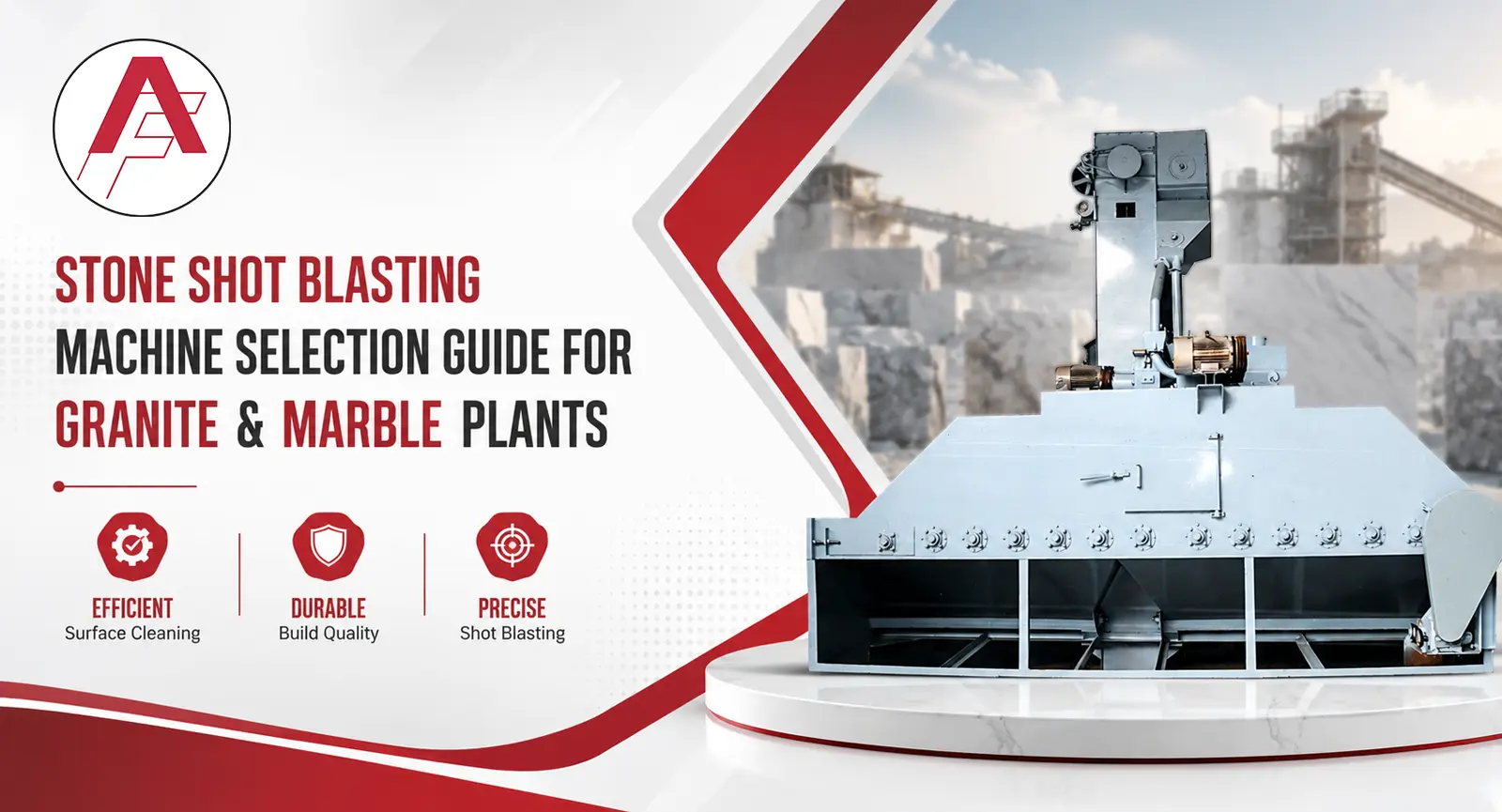
Introduction
Most blasting machine selection guides are written for metal fabrication, pipes, castings, and structural steel. The machine parameters, abrasive choices, and capacity calculations all assume a metal substrate.
Granite and marble are different. Stone is harder in some ways and more brittle in others. The wrong abrasive or the wrong blast pressure does not just leave a poor finish; it cracks the stone or leaves surface marks that cannot be removed without regrinding.
The selection process for a Stone Shot Blasting Machine needs to account for these specific material properties, and that means asking different questions from the ones you would ask when buying a machine for steel fabrication.
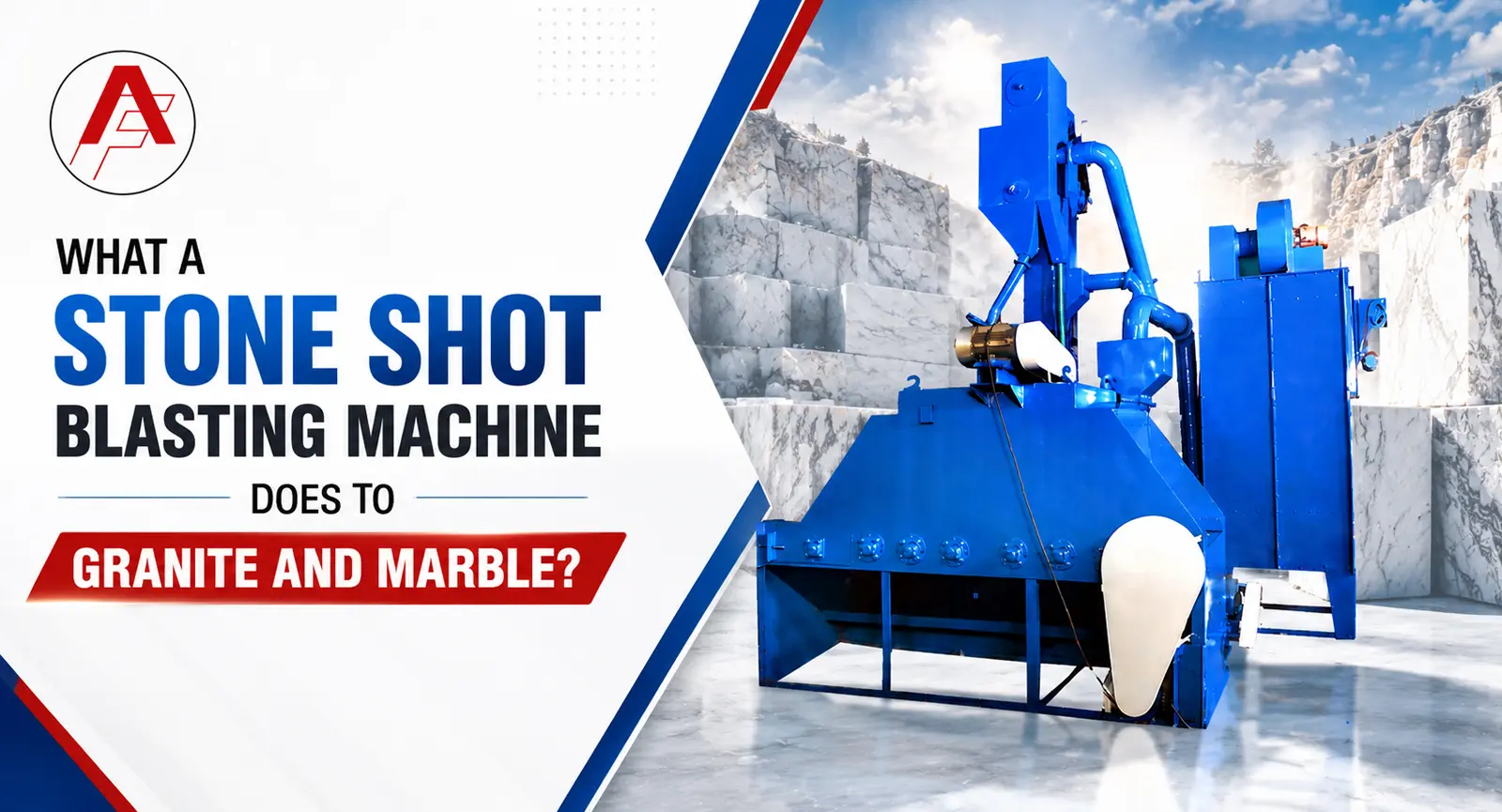
What a Stone Shot Blasting Machine Does to Granite and Marble?
Surface Finishing: Not Just Cleaning
On metal, shot blasting is primarily about cleaning and surface preparation, removing rust, scale, and contamination before coating or welding. On the stone, the application is different. Shot blasting machines on granite and marble are used to create specific surface textures:
- Bush hammered finish: Textured non-skid finish for floors, paving, and outdoor use.
- Antique or aged finish: The surface is rough to some extent, giving the stone a weathered appearance.
- Flamed finish: This process, done through abrasive blasting, creates a heat-treated appearance for granite.
- Slip-resistant surface: For pool surrounds, stair treads, and wet area flooring.
Each of these finishes requires a specific combination of abrasive type, blast pressure, and exposure time. Getting this combination right is what the selection process is about.
Machine Types and Which One Suits Stone Processing
Single Door Shot Blasting Machine
Adarsh Fabricators manufactures Stone Shot Blasting Machines in the 24HP to 48HP range, the single door configuration being most common. For stone processing where slabs are loaded individually and the blast cycle treats one piece at a time, a single door configuration works well for small to mid-volume granite plants where slab sizes vary significantly between orders.
The automatic wheel blasting mechanism ensures uniform blast coverage, which is important in the case of stone, where the surface uniformity is evident and also has a direct bearing on the market value of the product.
Swing Table Shot Blasting Machine
Another good choice is the Swing Table Stone Shot Blasting Machine. There are two versions, a semi-automatic model and an automatic double-door model. The rotating table allows the stone to pass through the blast area slowly. This helps to get the full surface properly covered. This makes it handy for odd shapes and tiles, especially when you want an even coating right to the edges. If you are working with marble tiles and you need a clean, consistent finish on high volumes, a swing table setup is often better than a single-door cabinet machine.
Matching Stone Shot Blasting Machine Capacity to Your Production Volume
This is where most buyers make the most mistakes, buying either too much machine or not enough.
A 28HP Tumblast machine with a 5-tonne per day capacity is not a small machine. A 38HP model handles significantly more. Choosing between them based on current production volume alone is short-sighted; the decision should account for where your plant will be in two to three years.
Questions to ask a stone shot blasting machine manufacturer before committing to a capacity:
- How many square metres of stone do you process per shift today?
- What is your realistic growth projection over the next two years?
- Are your stone sizes consistent, or do you process a wide range of dimensions?
- How much floor space can you allocate to the machine and material handling around it?
The answers to these questions narrow the field significantly before you start comparing prices.
Abrasive Selection for Stone: Why It Differs From Metal Blasting
A stone shot blasting machine and steel grit are the usual choices for blasting metal, but stone works very differently. Use the wrong one, and you risk damaging or over-processing the surface. The abrasive’s hardness and shape are what really decide how the stone ends up looking.
For granite:
- Steel grit has sharp, angular edges, so it cuts faster and leaves a rougher texture behind. This works well for anti-slip surfaces or a bush-hammered finish.
- Steel shot is round, so it gives a smoother result with a neat, even dimple pattern. This is the better option when you’re going for that classic antique look.
For marble:
- Marble is softer than granite, so it can’t take the same aggressive blasting. Going with a softer abrasive helps avoid stripping away too much material.
- Blast pressure and abrasive size need to be watched closely, especially near cut edges, since marble chips much more easily than granite.
At Adarsh Fabricators, we supply steel grit along with stainless steel shot in 1mm and 1.2mm sizes. The stainless steel shot is a smart pick when contamination is a concern, since it won’t leave rust stains the way carbon steel can on porous stone. This matters a lot with light-coloured marble, where even the smallest stain is easy to spot.
Conclusion
A Stone Shot Blasting Machine is a long-term capital investment. Getting the selection right upfront, machine type, capacity, abrasive configuration, and automation level, saves more money than the upfront cost difference between a well-matched machine and a compromised choice. Adarsh Fabricators has been manufacturing shot blasting machines and related equipment from Faridabad, Haryana, since 1968. Their range covers single door, swing table, tumblast, sand blasting, and paver block configurations, with the engineering experience to advise on the right setup for granite and marble plant a
FAQs

Adarsh Fabricators
Adarsh Fabricators, established in 1968, is a leading manufacturer, supplier, and exporter of industrial machinery including blasting machines, sand mixers, and ladling machines, offering comprehensive services.
